

Is That Neck Tension Really JUST Stress?!
“I carry all my stress in my neck.”
It’s one of the most common things I hear from patients.
Maybe you’ve noticed your neck tightening after a stressful meeting, a long day at the computer, or a drive through traffic. By the end of the day, your shoulders are practically touching your ears, and you’re constantly trying to stretch or rub away the tension.
Sound familiar?
While stress absolutely can contribute to neck tension, it isn’t always the whole story.
Sometimes the problem isn’t simply how much stress you’re under, but how your body has learned to respond to it.
One place we can see this connection is in something we do thousands of times every day: breathing.
How Are Stress, Breathing, and Neck Tension Connected?
When we experience stress, our body’s fight-or-flight response kicks in. This is a normal and important response that prepares us to react to challenging situations.
Our heart rate may increase, our muscles become more alert, and our breathing often becomes faster and shallower.
This is helpful when we need to respond quickly to something stressful. The problem develops when our bodies struggle to return to a more relaxed state.
Over time, some people begin to rely more heavily on the muscles in their neck and shoulders to help them with breathing, even when they’re not in a stressful situation, like when they’re sitting quietly at their desks.
These muscles may already be working harder than necessary before that stressful meeting even begins.
Stress may be what triggers your neck tension, but it isn’t necessarily the only reason those muscles feel tight.
Your Neck Was Never Meant to Do All the Work
Most of us don’t give much thought to how we breathe. After all, our bodies do it automatically.
But breathing involves more than just moving air in and out of our lungs.
Our primary breathing muscle is the diaphragm, a dome-shaped muscle located beneath the lungs. As it contracts, it helps expand the chest cavity so air can enter the lungs.
We also have accessory breathing muscles in our neck and upper chest/back that help when we need additional air, such as during intense exercise.
These include muscles like the Scalenes, Upper Trapezius, and Sternocleidomastoid (SCM), which also help move and stabilize our head and neck.
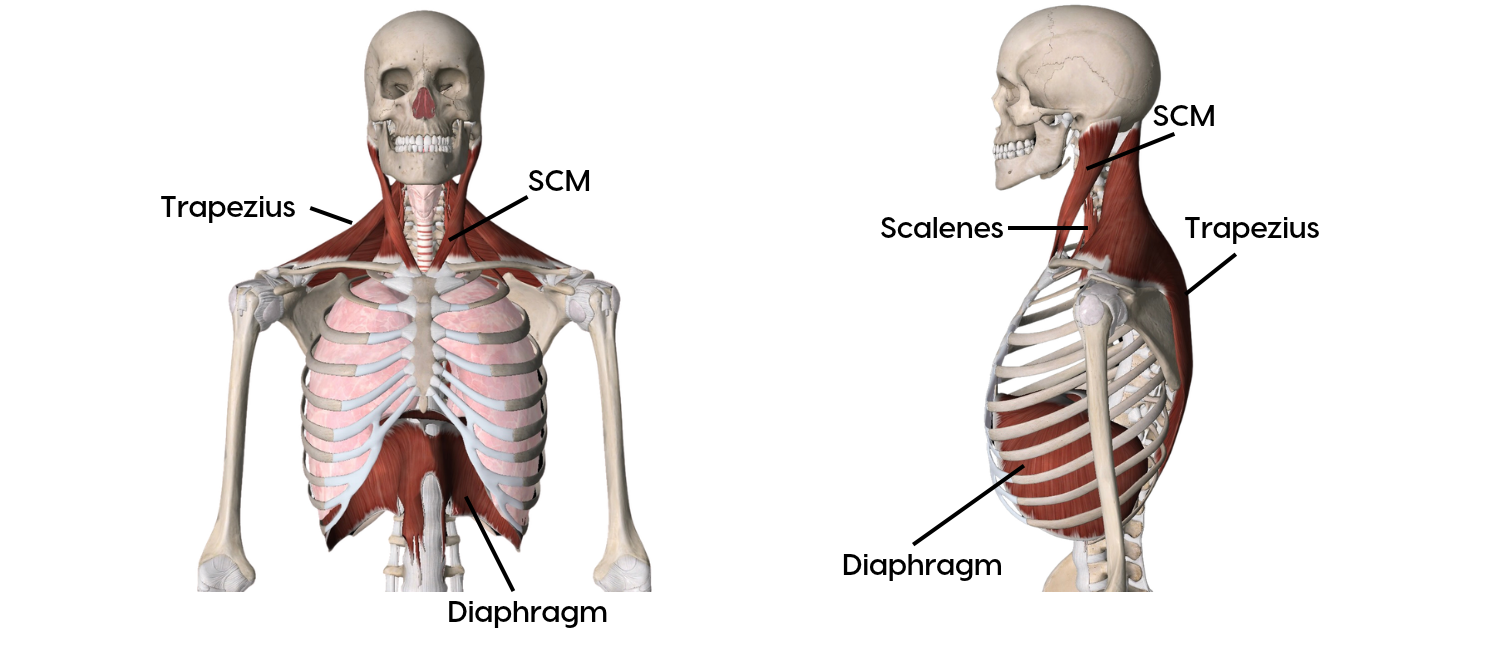
They’re supposed to help with breathing when needed, not do most of the work during quiet, everyday breathing.
When our breathing patterns change, these muscles may become more active than necessary. For some people, this can contribute to the familiar feeling of tightness, soreness, and fatigue through the neck and shoulders.
The stressful meeting may be what triggers the tension—but the underlying movement pattern is often already there.
And here’s where things get interesting.
Why Does My Neck Tension Keep Coming Back?
Have you ever gotten a massage, stretched your neck, or used a heating pad and felt wonderful afterward, only to have that same tension return a few hours later?
It’s frustrating, especially when you’re doing everything you think you should to help.
But what if the tightness is only part of the problem?
Our bodies don’t move as a collection of independent parts. The position of our rib cage, pelvis, and spine can influence how we breathe and how muscles throughout our bodies work together.
Previous injuries, surgeries, repetitive activities, and long-standing movement habits can also influence these patterns.
For example, if your rib cage isn’t moving as efficiently as it could, your body may rely more heavily on muscles in your neck and upper chest to help expand your chest during breathing.
Stretching those muscles may provide relief, but if they’re still being asked to perform the same extra work, the tension may return.
Sometimes, finding lasting relief means looking beyond where you feel the discomfort and understanding why those muscles are working so hard in the first place.
Start With Your Breath: A Simple Exercise to Try
We take thousands of breaths every day, yet very few of us pay attention to how we’re breathing.
One of the simplest places to start is becoming aware of what your neck and shoulders are doing with each breath.
Try this:
- Sit in a chair with both feet flat on the floor.
- Feel your weight evenly distributed through both sit bones.
- Allow your lower back to gently round as you settle into the chair.
- Inhale quietly through your nose, allowing your lower ribs to expand without lifting your shoulders.
- Slowly exhale through your mouth, letting the air out gently and completely without forcing it.
- Allow a brief, comfortable pause before taking your next breath.
- Repeat for five slow, relaxed breaths.
As you breathe, notice whether your shoulders want to lift or your neck muscles tighten. Do you feel your rib cage expand, or does only your belly move?
Can you keep your neck and shoulder muscles relaxed while letting your rib cage move?
The goal isn’t to force yourself to breathe a certain way or take the biggest breath possible. It’s to begin recognizing unnecessary tension and exploring a more relaxed breathing pattern.
If you feel dizzy, short of breath, or uncomfortable, return to your normal breathing.
You may notice that your neck and shoulders feel a little more relaxed afterward.
And even if you don’t feel an immediate difference, becoming aware of how you’re breathing can be a helpful first step.
What About Stretching and Neck Mobility Exercises?
Don’t worry. I’m not suggesting you throw out all those neck stretches you’ve been doing!
Stretching, mobility exercises, and strengthening can all be valuable tools for managing neck discomfort.
They may help improve movement, reduce sensitivity, and provide relief when your muscles feel tight.
But if your neck muscles are repeatedly being recruited to compensate for other movement or breathing patterns, stretching alone may not address everything contributing to your symptoms.
That’s why I often combine traditional neck exercises with treatment focused on breathing mechanics, rib cage mobility, and how the body moves as a whole.
Looking for a few stretches to try? You can find some of my favorite neck mobility exercises on my YouTube channel here.
How Can Physical Therapy Help With Chronic Neck Tension?
If your neck always seems tight, even after stretching, massage, or other treatments, physical therapy may help you better understand what’s contributing to the problem.
At Be You Physical Therapy, I don’t just look at the muscles that hurt. I look at how your body is working together.
Addressing the Tension: Dry Needling
Dry needling is one tool I may use to help address painful, overworked muscles.
It involves inserting thin needles into specific areas of muscle and can reduce pain and improve movement for some people.
But here’s the important part: relieving muscle tension and addressing why that tension developed are not always the same thing.
Dry needling may help you feel better in the short term, but if the same movement patterns continue placing extra demands on those muscles, the discomfort may return.
That’s why I often combine treatments like dry needling with movement retraining and exercises designed to address contributing factors.
Looking at the Bigger Picture: Individualized Movement Assessment
No two people develop chronic neck tension for exactly the same reason.
For one person, an old whiplash injury may have changed how their neck muscles work.
For another, limited rib cage mobility or breathing habits may be contributing to the problem.
For someone else, work demands, strength limitations, or how they coordinate movement throughout their body may play a larger role.
And often, it’s a combination of several factors. That’s why physical therapy shouldn’t be a one-size-fits-all approach.
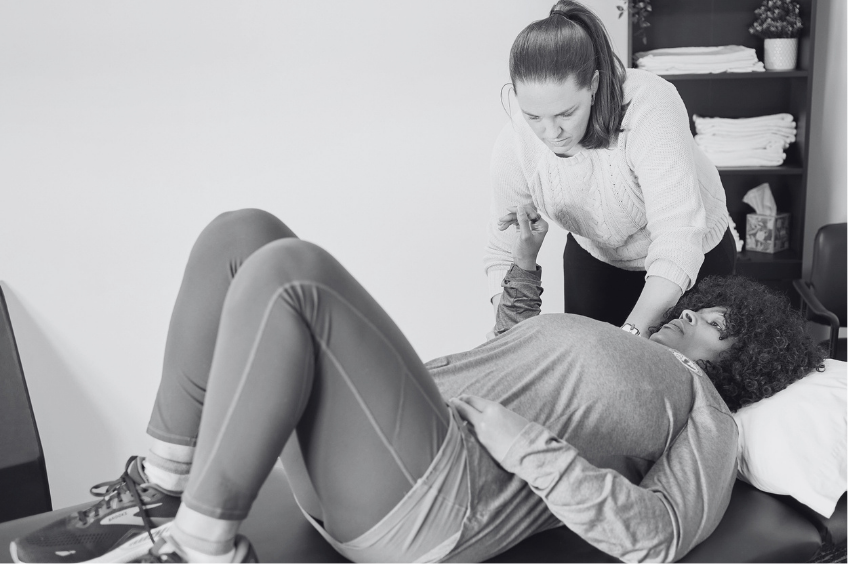
By evaluating your movement, breathing mechanics, strength, and overall posture, we can identify factors that may be contributing to your symptoms and develop a treatment plan tailored to you.
When Should You Have Your Neck Tension Evaluated?
Occasional neck stiffness after a long day isn’t unusual.
But if you’re constantly stretching your neck, frequently dealing with headaches, or noticing that tension is interfering with sleep, work, or activities you enjoy, it may be time to look a little deeper.
If you experience persistent numbness, tingling, or weakness in your arms, it’s important to have those symptoms evaluated rather than assuming they’re related to muscle tension. Sudden severe neck pain with a severe headache, fever, or new neurological symptoms warrants prompt medical attention.
You don’t have to wait until your symptoms become severe to ask questions about what’s happening.
Getting Back to Being You
The goal isn’t simply to have less tension in your neck.
It’s to understand what’s contributing to that tension so you can move more comfortably and confidently throughout your day.
Maybe that means finishing your workday without constantly rubbing your shoulders, enjoying a weekend hike without a stiff neck, or simply being able to relax at the end of the day.
Whatever that looks like for you, understanding how your body works is an important step toward getting there.
If you’ve been dealing with neck tension that just won’t go away, let’s have a conversation. At Be You Physical Therapy & Wellness, we’ll look beyond the tight muscles to explore what may be contributing to your discomfort and develop a plan based on your individual needs and goals.
Schedule an evaluation or a free 15-minute phone consultation and let’s work toward helping you feel better and get back to being you.
Be Healthy, Be YOU
-Dr. Emily
